Quick Summary
When automatic or manual gates malfunction due to shifting soil, bent tracks, or motor burnouts, securing reliable gate repair in Patterson is essential for driveway safety and legal compliance. Liberty Gate Repair San Francisco delivers lasting solutions by prioritizing root-cause mechanical realignment and expert field welding over temporary electronic fixes during rapid, single-visit service calls. Property owners will understand the primary drivers of gate failure and know how to contact Liberty Gate Repair San Francisco for same-day repairs or a comprehensive on-site technical inspection.
Need Gate Repair in Patterson? Professional Gate Repair and Maintenance
When you need dependable gate repair in Patterson, getting a fast, accurate diagnosis saves time and protects your property. A stalled motor, an off-track sliding gate, or a cracked hinge leaves your driveway open and creates an immediate safety hazard. Under California law, inspections and repairs are required for regulated gates, making it essential to keep hardware structurally sound, properly aligned, and safe to operate.[1]
Professional gate technicians, such as the specialists at Liberty Gate Repair San Francisco, can handle structural welding, align sagging posts, and troubleshoot control boards to restore proper operation.
Automated gate breakdowns often trace back to physical alignment issues rather than purely electrical failures. Shifting soils and seasonal temperature swings can put stress on concrete footings and track lines. If you replace a motor without correcting a warped track or sagging post, the new motor will simply burn out again under the extra drag. Proper repair focuses on fixing mechanical resistance first, followed by motor and control board servicing to deliver a lasting fix.
What Factors Influence Gate Repair Costs in Patterson?
The cost to fix an automatic or manual gate depends on the nature of the mechanical and electrical issues, the size and weight of the gate, and whether on-site structural welding is required. Exact pricing reflects the parts needed, the extent of track damage, and the labor required to restore safe operation.
Understanding repair scopes
Service calls range from clearing jammed rollers and replacing photo-eyes to rebuilding mounting plates and resetting heavy hinge assemblies. Mechanical drag caused by shifting driveway pads is one of the most common reasons motors fail early. Here is how typical repair categories break down:
| Service Type | Root Issue | Field Welding | Typical Scope of Work |
|---|---|---|---|
| Track Realignment | Ground settlement or track deflection | As needed | Clearing, shimming, and leveling the ground track |
| Structural Realignment | Post movement or cracked hinge welds | Required | Welding hinge plates and bracing structural posts |
| Motor and Opener Service | Burnt motor windings or board failure | Optional mount repair | Electrical diagnostics, board replacement, and limit adjustments |
Key cost drivers: mechanical vs. electrical issues
A gate that stops halfway is often misdiagnosed as an electrical failure when the true culprit is physical binding. When ground movement warps a track or pulls a hinge post out of plumb, the motor must pull significantly harder to move the gate. Eventually, the motor draws excess amperage and either trips the internal safety circuit or burns out completely. Fixing the hinge geometry or leveling the track eliminates that drag so the motor operates within its normal rating.[3]
Why Is Your Sliding or Swing Gate Sticking and Failing to Move?
Need gate repair in Patterson?
We’re available now — call for a fast, free estimate.
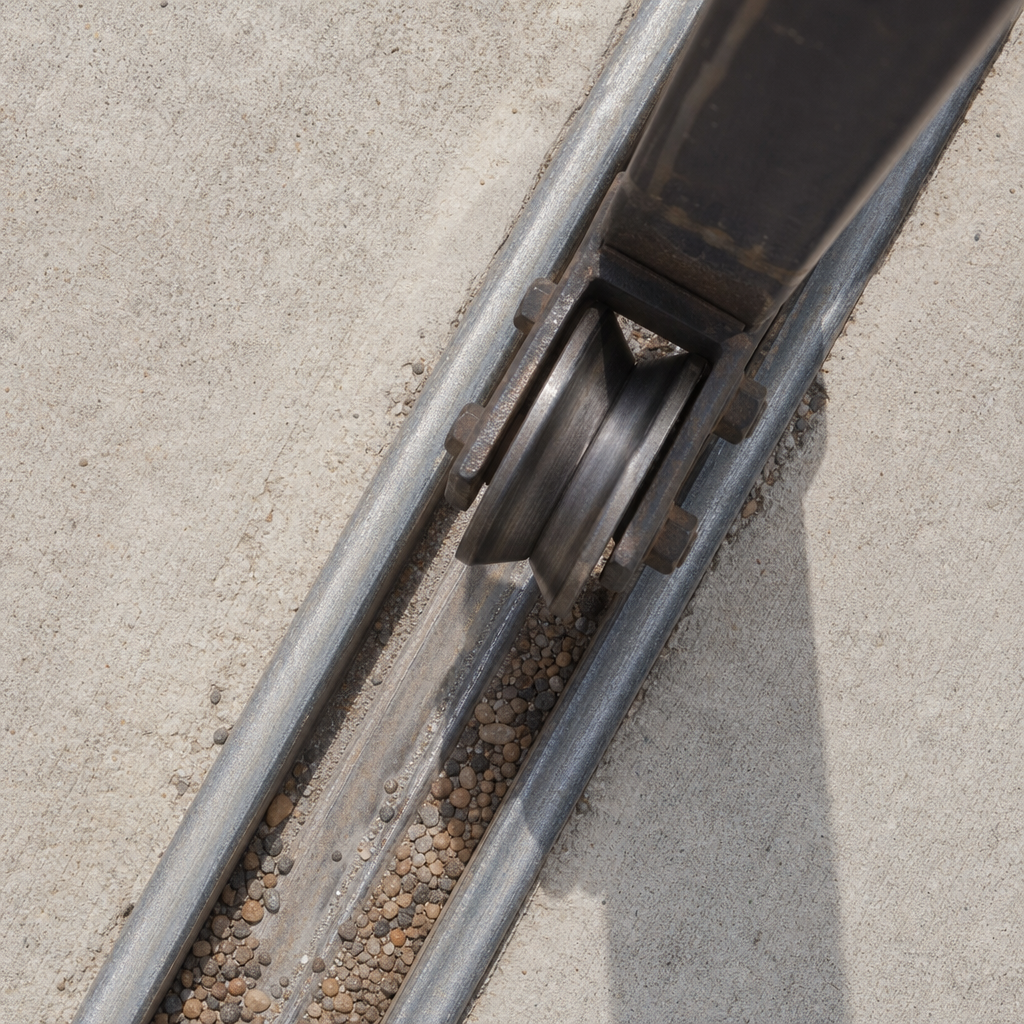
Automated sliding and swing gates usually stick or stall due to physical resistance from warped tracks, shifting soil, or worn hinge bearings rather than sudden electronic glitches. When mechanical friction exceeds the operator’s built-in limits, the safety reverse automatically stops the gate to prevent damage or injury.
Subsurface ground shift and track deflection
Property owners often assume an unresponsive gate needs a new circuit board, but shifting ground is frequently the real problem. In areas with expansive soils, wet and dry seasonal cycles cause the ground to expand and contract. This subtle movement puts uneven pressure on concrete footings and anchor bolts.
For sliding gates, this movement bends ground-mounted V-tracks. For swing gates, it pulls heavy support posts out of plumb, forcing the leaf to drag along the driveway. If you install a replacement operator without straightening the track or leveling the post, the new unit will face the same mechanical strain. Proper repair requires correcting the track deflection and restoring post alignment before finalizing opener settings.
Roller wear, hinge sag, and operator strain
Rather than simply cranking up the motor’s force settings to push past a sticky point, technicians restore smooth manual movement through a direct, mechanical repair process:
- Track and foundation inspection: Checking for foundation settling, anchoring heavy steel shims, and straightening bent track sections.
- Hinge and bearing replacement: Installing heavy-duty sealed ball-bearing hinges designed to carry substantial cantilevered loads.
- On-site structural welding: Re-anchoring loose mounting brackets, securing hinge plates, and reinforcing stress fractures in the gate frame.
- Force profile calibration: Resetting the operator limits and safety reverse settings once the gate swings or slides freely by hand.
Eliminating physical drag extends the lifespan of your drive motor, reduces strain on internal gears, and prevents emergency lockouts.
Which Gate Motors, Openers, and Access Systems Can Be Serviced On-Site?
Driveway gates and operator systems can be diagnosed, adjusted, and repaired directly on-site. Technicians service electromechanical swing arms, slide operators, safety loops, optical photo-eyes, and wireless access systems.
Operator diagnostics and servicing
During an inspection, technicians test the drive mechanism to confirm whether a blown fuse or stripped gear was caused by normal wear or physical track binding. Quality replacement parts and factory components are used by specialists such as Liberty Gate Repair San Francisco to restore the system.
Access control, safety sensors, and keypad troubleshooting
When a gate reverses unexpectedly or refuses to close, the issue is often located in the safety or access loop rather than the motor itself. Diagnostic steps cover:
- Photo-eye realignment: Re-aligning optical beams that have drifted out of true due to ground vibration or post shifting.
- Inductive safety loops: Testing detector sensitivity, lead-in wire resistance, and frequency settings affected by asphalt or concrete shifts.
- Keypads and receivers: Repairing water-damaged circuit boards, addressing radio frequency interference, and programming remote controls or cellular intercoms.
Frequently Asked Questions
How much does automatic gate repair cost in Patterson?
Repair costs vary depending on the problem. Minor adjustments like realigning photo-eyes or replacing safety sensors are relatively straightforward, while complex repairs involving welding, track replacement, or a complete motor overhaul require more labor and specialized parts. A technician will inspect the system on-site to provide a clear, itemized quote before starting work.[2]
Who provides emergency driveway gate repair in Patterson?
Gate repair technicians, including teams like Liberty Gate Repair San Francisco, can provide emergency service for gate systems to secure your property and restore safe operation.
How quickly can a technician fix a stuck electric gate?
Many common problems, such as jammed rollers, misaligned safety sensors, broken chains, or failed capacitors, can be resolved during the initial service visit. If the gate has suffered structural damage from a vehicle impact or severe ground settling, field welding and post realignment may take longer.
What are common causes of electric gate motor failure?
The leading causes of motor failure include excessive mechanical resistance from sagging hinges or bent tracks, electrical power surges, water intrusion into the housing, insect nests on control boards, and worn internal drive gears.
Can a damaged sliding gate track be repaired on-site?
Yes. Technicians use welding, heavy-duty anchors, and leveling equipment to straighten bent tracks, weld cracked joints, or replace damaged track sections directly on your driveway.
Need gate repair in Patterson?
We’re available now — call for a fast, free estimate.
Sources
- Patterson, CA – Official Website | Official Website – pattersonca.gov (2026)
- AB 2149 (Connolly) – sjud.senate.ca.gov (2026)
- 2022 Regional Transportation Plan – Sustainable Communities Strategies – stancog.org (2022)
Gate Repair in Nearby Cities
We also serve the communities around Patterson:
- Gate Repair in Stockton
- Gate Repair in Lodi
- Gate Repair in Manteca
- Gate Repair in Ripon
- Gate Repair in Galt
- Gate Repair in Garden Acres
- Gate Repair in Mountain House
- Gate Repair in August
Frequently Asked Questions
How can I tell if my gate operator failure is caused by ground shifting?
If your gate drags along the driveway or stalls at specific points, soil movement has likely warped the track or pulled support posts out of plumb. You can disengage the motor and move the leaf by hand; if it binds mechanically, Liberty Gate Repair San Francisco can realign the track and posts to eliminate the resistance burning out your motor.
Why is on-site structural welding often necessary during a gate repair visit?
Daily operation and shifting soil put severe tension on hinge plates, brackets, and track seams, frequently causing metal fatigue and cracked joints. Mobile field welding allows technicians from Liberty Gate Repair San Francisco to reinforce damaged steel frames and securely re-anchor hardware directly on your driveway during a single service call.
What should be done if an automatic driveway gate reverses before closing completely?
An unexpected reverse usually indicates misaligned optical photo-eyes, obstructed safety loops, or physical track friction triggering the operator safety limits. A professional technician will inspect sensor alignment and eliminate mechanical drag before recalibrating the motor travel settings.
About the author
 |
Marcus Caldwell Marcus Caldwell is a licensed gate automation specialist with over 12 years of experience managing complex access control systems and high-traffic commercial gate installations. Holding a degree in Electrical Engineering from San Francisco State University, he has supervised the repair and maintenance of hundreds of residential and commercial gates across the Bay Area. His focus is on delivering secure, reliable, and swift solutions for emergency gate failures. |
Gate not opening, off track, or opener dead?
We’re available now — call for a fast, free estimate.
Call Now - Free Estimate